China lies in the eastern part of the Eurasian continent. Shaped by the monsoon climate and nourished by the Yangtze and Yellow Rivers, it gradually gave birth to a unique and brilliant civilization.
🌴In Mainland Southeast Asia, the monsoon climate is equally prominent. Here, the Ayeyarwaddy and Mekong rivers flow from north to south across the entire peninsula. Nourished by this climate and these great rivers, what kind of lifestyles, art, and spiritual beliefs have emerged on this land?
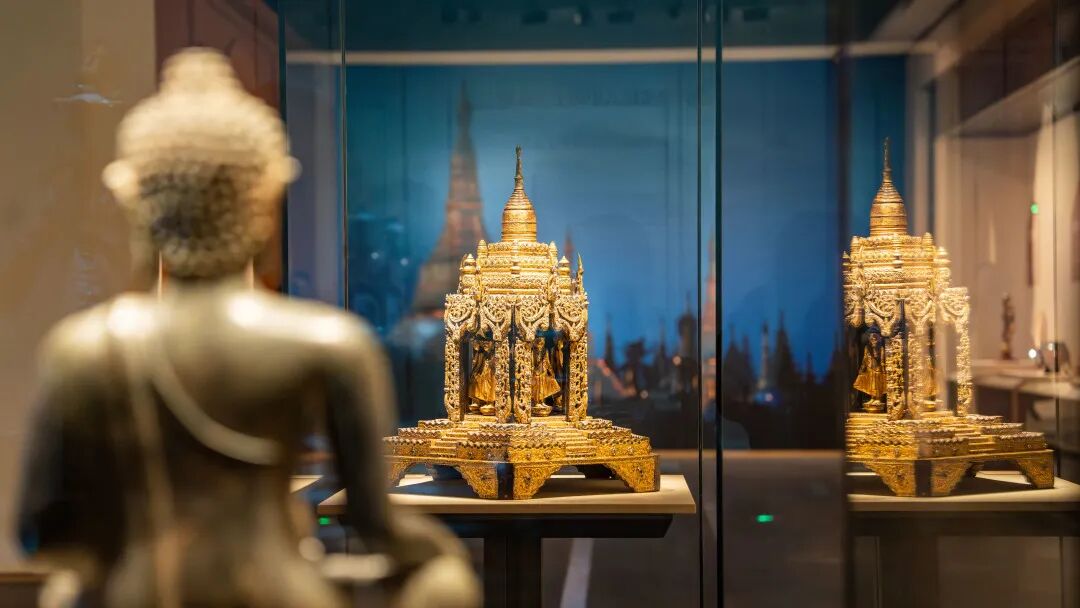
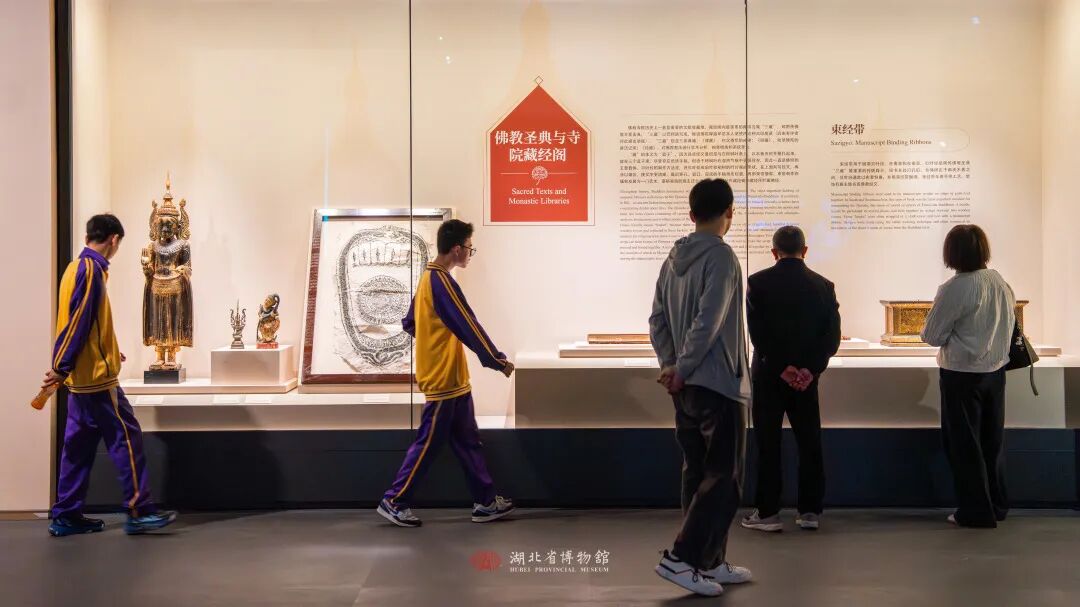
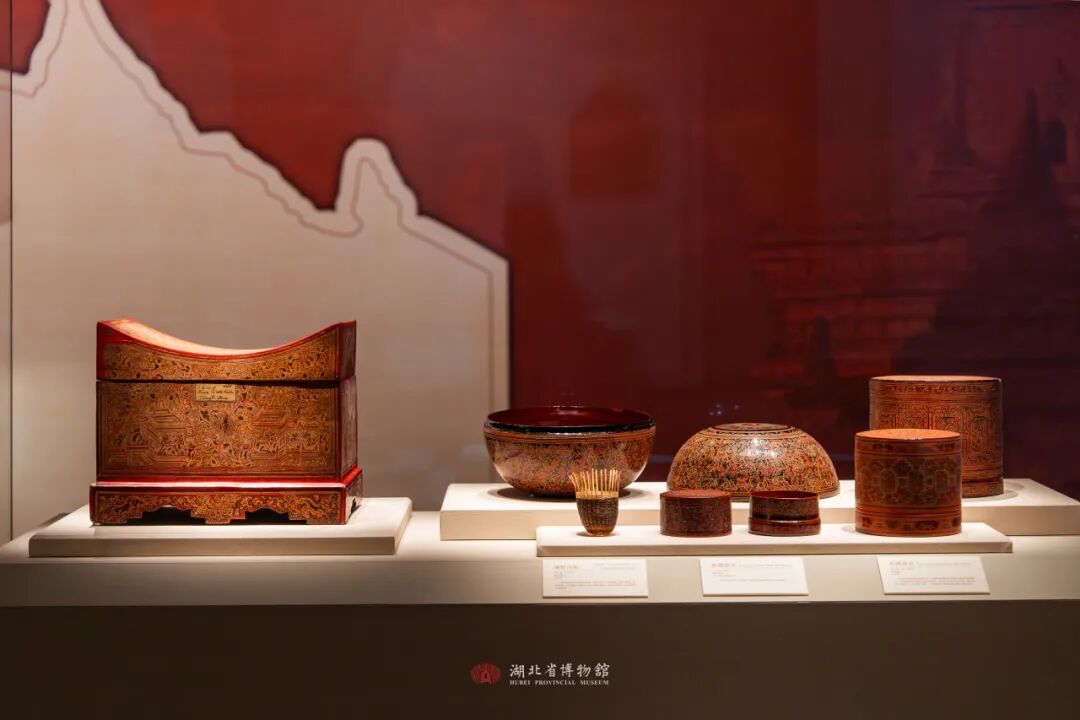
On April 29, the special exhibition “Peacock and White Elephant: People and Their Lives between the Ayeyarwaddy and the Mekong” opens in the Special Exhibition Hall on the third floor of the South Building of the Hubei Provincial Museum.
The exhibition features a selection of nearly 90 Southeast Asian artifacts, including Buddhist sculptures, Myanmar lacquerware, Thai ceramics, and objects related to the performing arts, such as musical instruments, marionettes and shadow puppets, offering a comprehensive view of daily life and local culture in Myanmar and Thailand.
01
Starting a New Day
with Devotional Ceremony
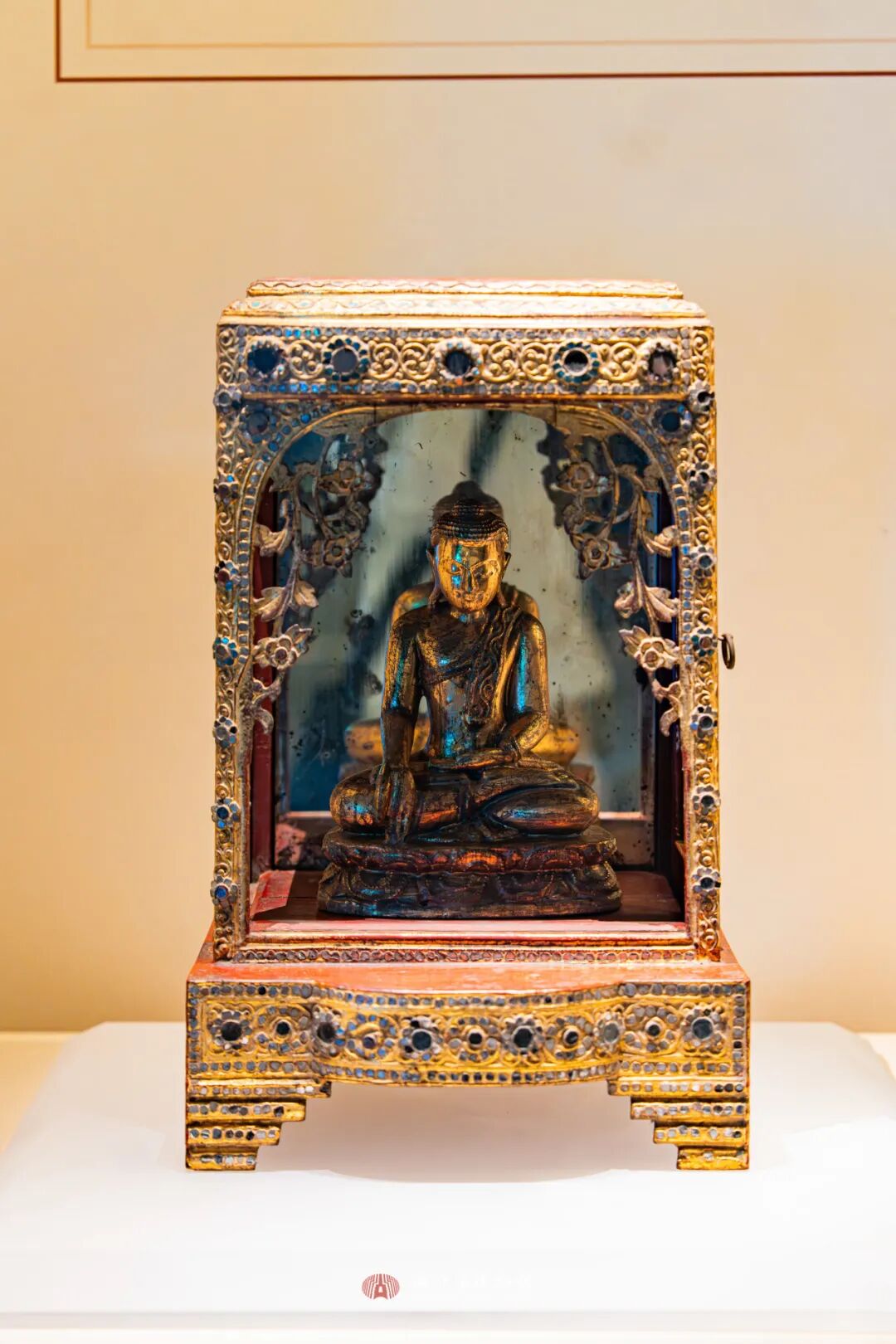
House Shrine | Mandalay, Myanmar | First half of the 20th century
The term “shrine” often refers to a small cabinet or niche for enshrining a Buddha statue or deity.
In China, there is a common saying, “The seven necessities of daily life: firewood, rice, oil, salt, soy sauce, vinegar, and tea”. When we wake up in the morning, we often first engage ourselves with the daily chores and livelihood.
But for the people living between the Ayeyarwaddy and the Mekong, most of whom are Buddhists, the very first thing they do upon waking is to pay homage at their domestic shrine, starting the day with devotional ceremony.
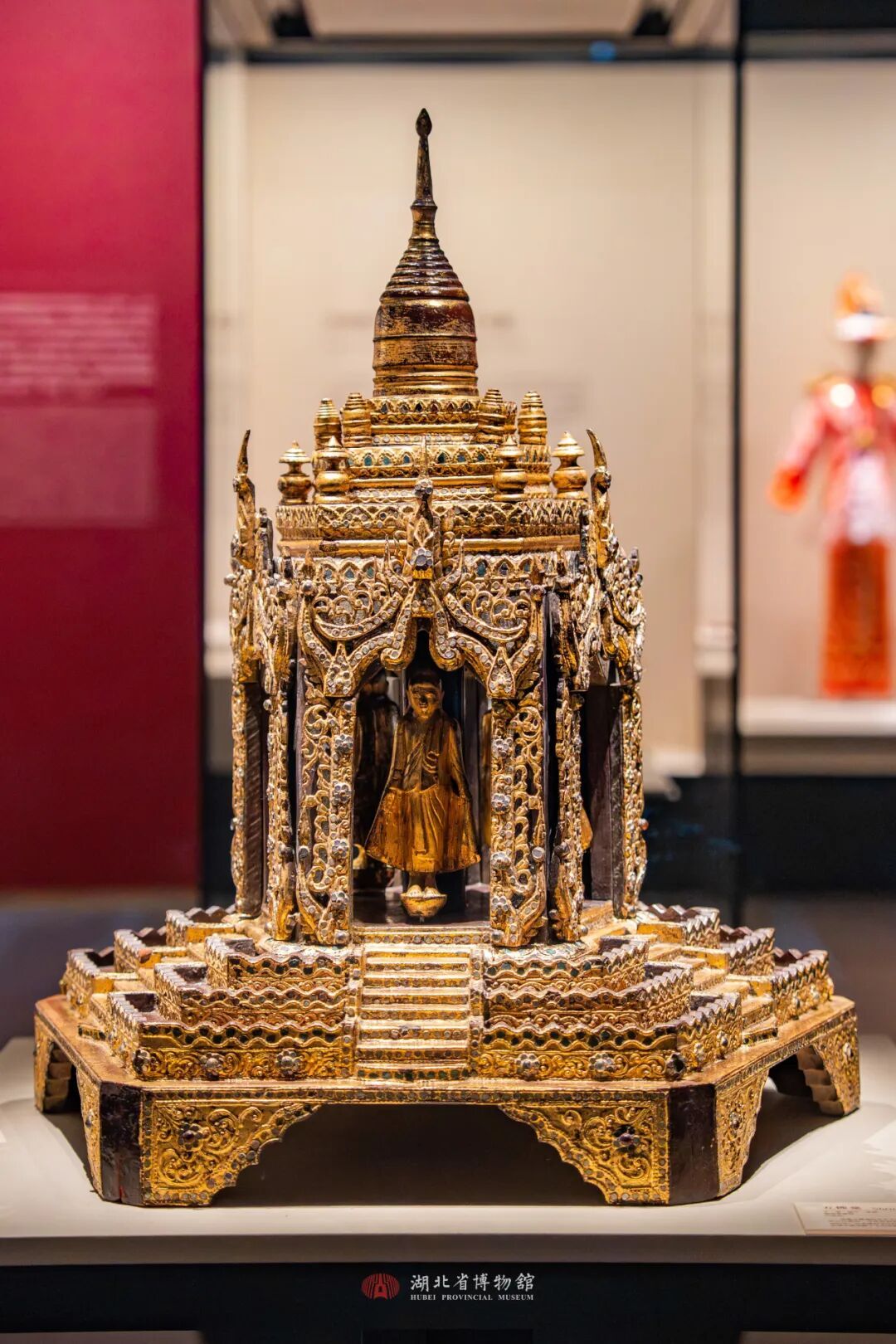
Shrine with Five Buddhas | Mandalay, Myanmar | 19th century
The style and decoration of this piece are characteristic of Myanmar religious architecture such as temples and monastic buildings since the Konbaung period (1752–1885CE). This shrine was probably intended as a meritorious donation to a Buddhist temple or monastery.
In many households across Myanmar and Thailand, it is common to find domestic shrines enshrining Buddha statues. The shrine is a spiritual center of the family. People prepare offerings of water, food, incense, and flowers to venerate the Buddha image, and then offer food to the monks who walk through the towns and villages at dawn to collect alms.
Shrines in different regions also embody distinct local characteristics: In Myanmar, the shrine itself can be a niche in the wall, or a small cabinet. It is usually made of teak wood that can sometimes be elaborately decorated with lacquer, gold, and inlays of little mirrors, glass or precious stones. In Thailand, raised tables or wall mounted, decorated shelves seem to be more common.
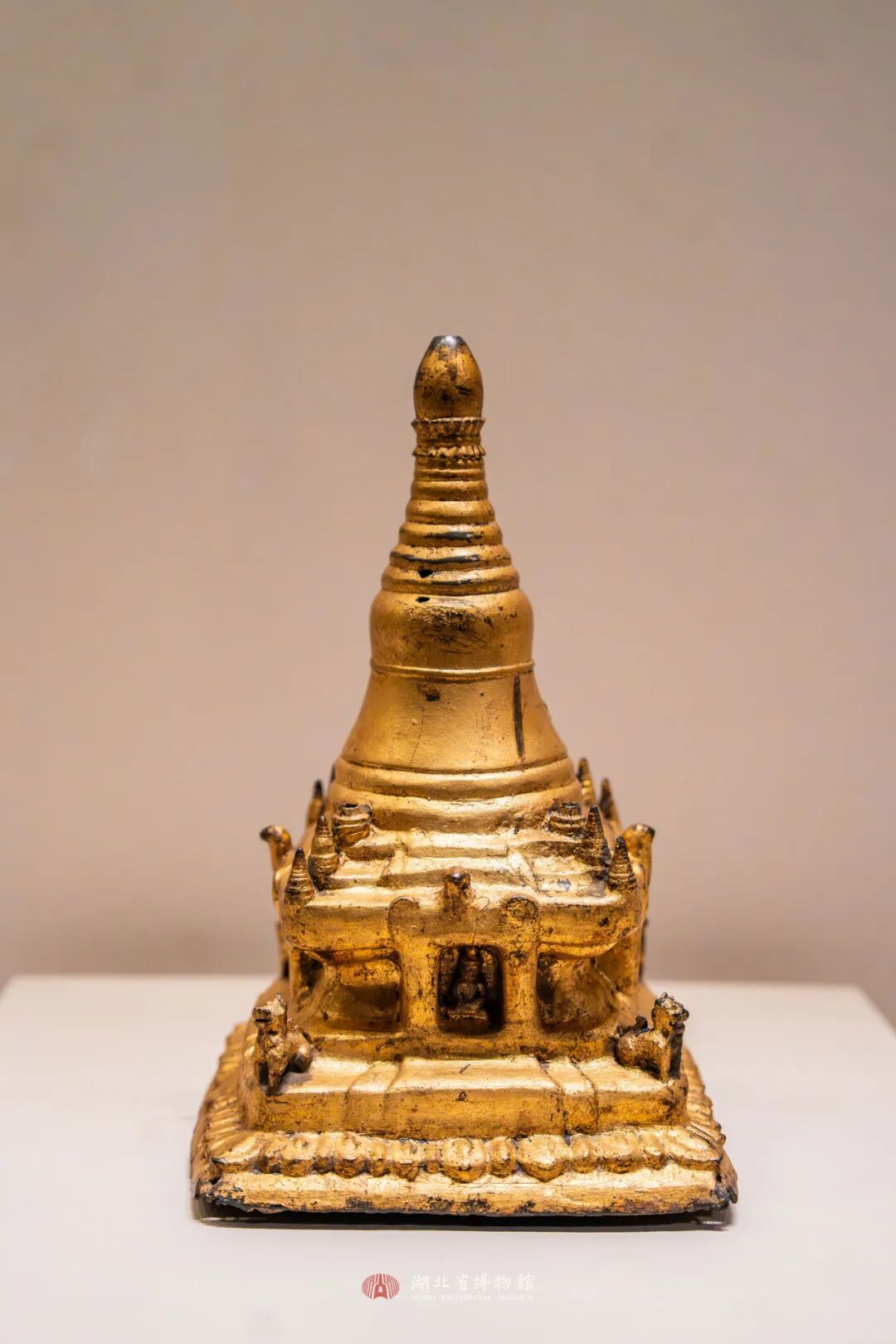
Cetiya | Bagan, Myanmar | 12th–13th century
This gilded miniature cetiya dates back to the time of the first major Myanmar kingdom of Bagan. It is decorated with lotus flowers and is flanked by small lion figures at the corners. A cetiya is a building erected as a monument to the Buddha and his teachings.
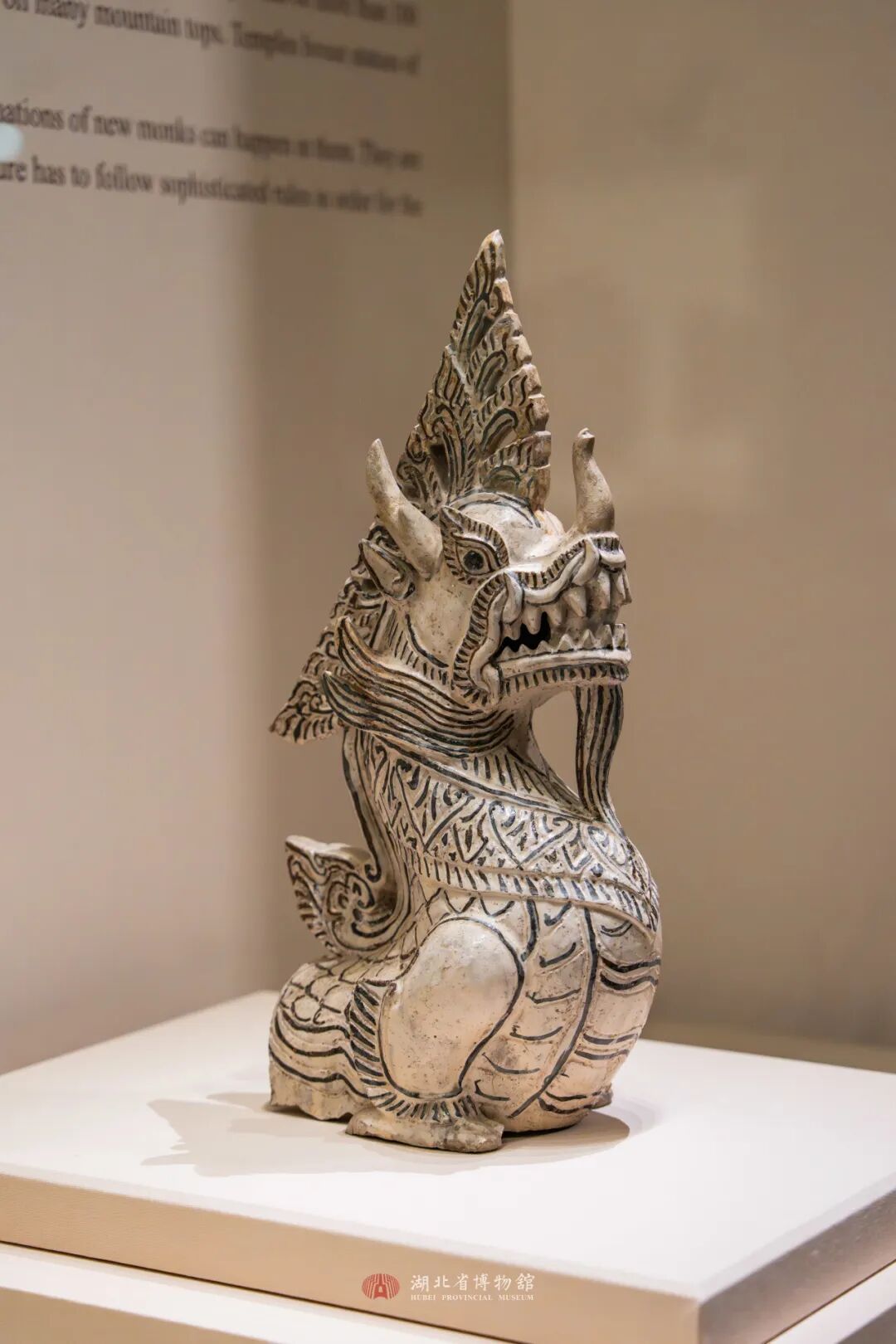
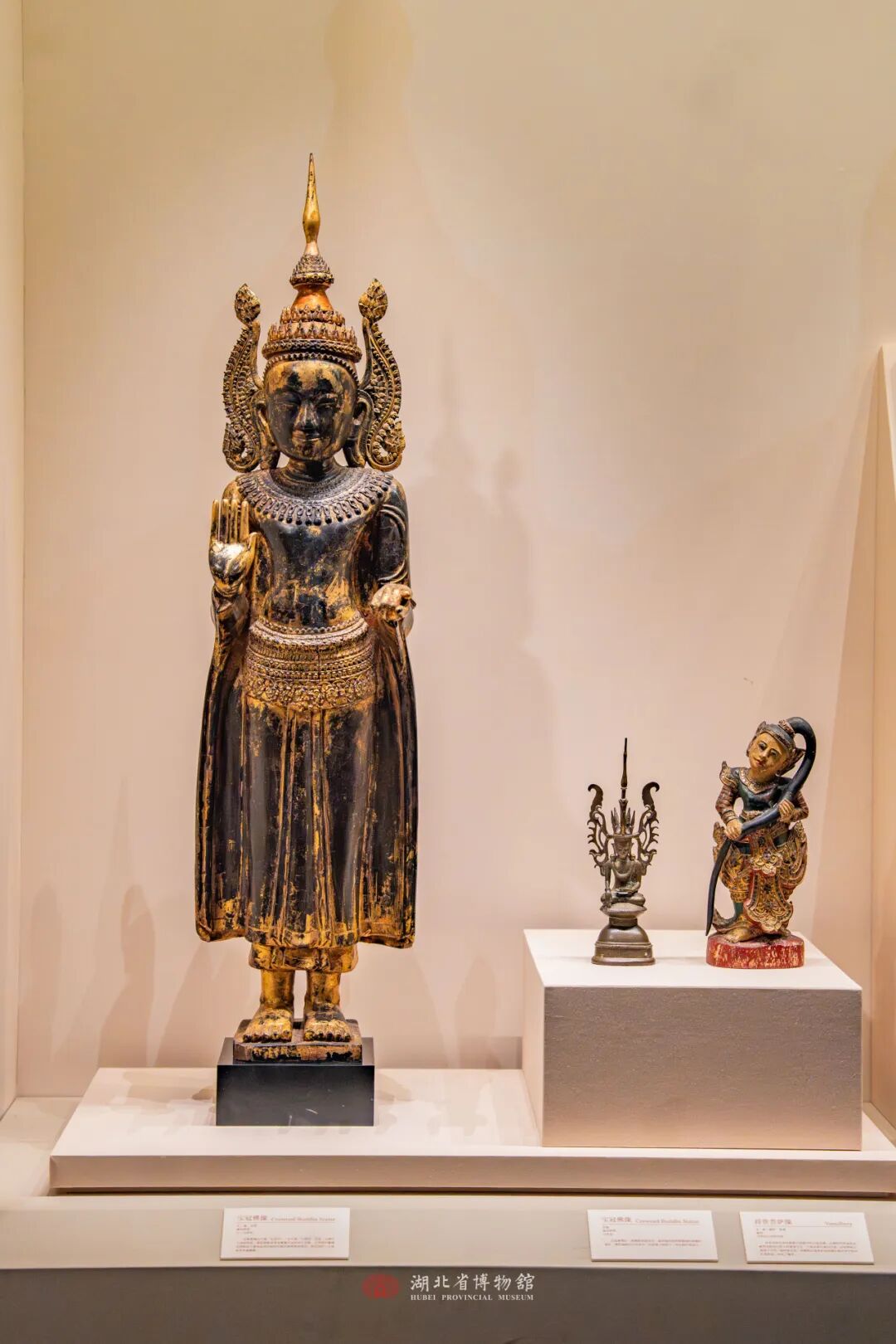
Left: Architectural Finial in the Shape of a Mythical Creature | Sukhothai, Thailand | 15th–16th century
This architectural finial takes the form of a nāga, a mythical dragon commonly seen in Thai religious architecture.
Right, from left to right:
Crowned Buddha Statue | Shan State, Myanmar | 17th–18th century
Crowned Buddha Statue | Shan State, Myanmar | 18th century
Vasudhara, the Earth Goddess | Myanmar | 19th–early 20th century
Beyond laypeople, the community of monks (Saṅgha) is the core of social and religious life in Myanmar and Thailand.
After taking their breakfast in silence, monks go on alms rounds at dawn to receive donations. They may then teach village children and novices, they may meditate, or study scriptures in the monastery’s library.
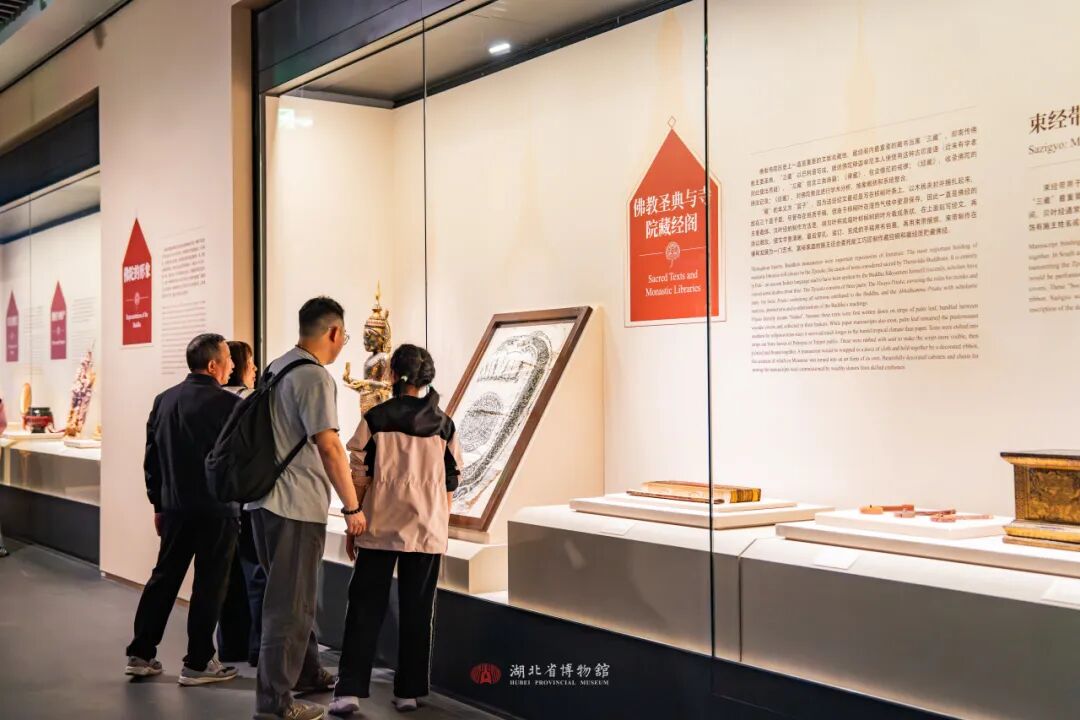
Throughout history, Buddhist monasteries were important repositories of literature. Due to the humid tropical climate, most Buddhist scriptures in South and Southeast Asia were recorded on palm leaves, while paper manuscripts were relatively rare.
Texts were etched into strips cut from leaves of Palmyra or Talipot palms. These were rubbed with soot to make the script more visible, then pierced and bound together. Such manuscripts are known as palm-leaf manuscripts.
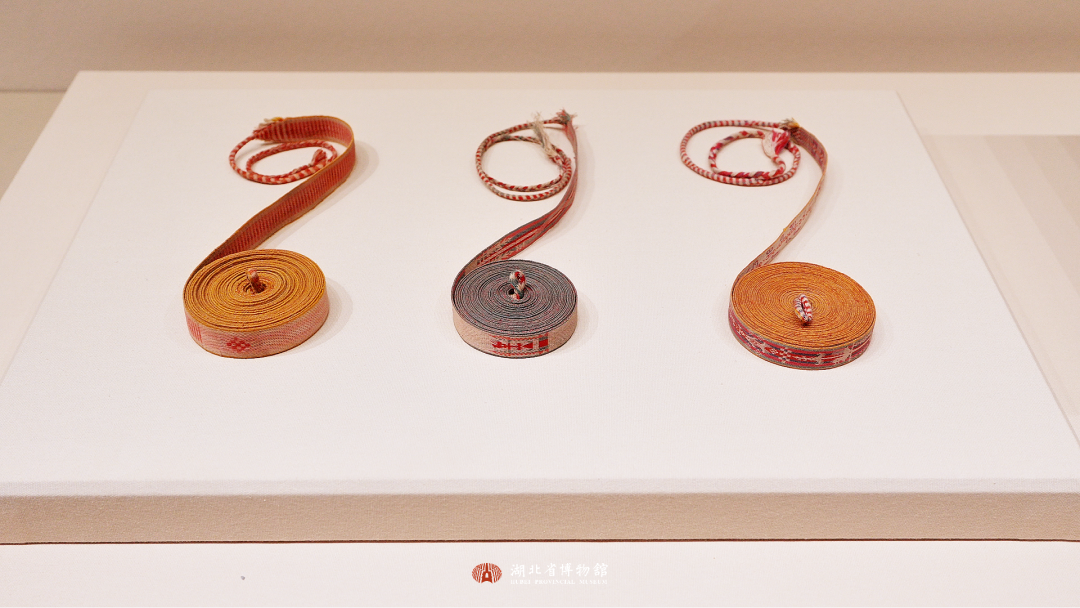
Manuscript Binding Ribbons (Sazigyo)| Myanmar |19th–early 20th century
The palm leaf manuscripts were often wrapped in a cloth cover and tied with a manuscript ribbon. Sazigyo were made using the tablet weaving technique and often contained an inscription of the donor’s name or verses from the Buddhist texts. The creation of such ribbons became an art form in Myanmar.
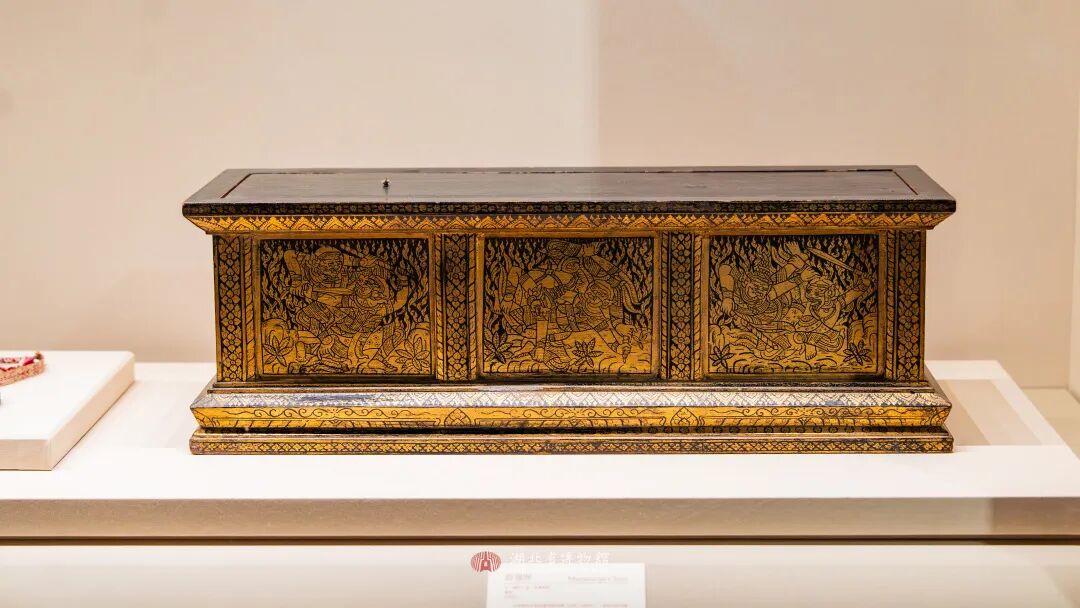
Manuscript Chest| Thailand |19th century
Beautifully decorated cabinets and chests for storing the manuscripts were commissioned by wealthy donors from skilled craftsmen. This wooden chest was created during the Rattanakosin era (1782–1932 CE), probably in the 19th century. The panels on the sides of the chest depict monkeys and demons engaged in fierce combat—probably based on the Ramakien, the Thai version of the Ramayana epic, where the monkey king Hanuman is helping the hero Phra Ram by sending his monkeys to fight Thotsakans demon army.
At the conclusion of many Buddhist ceremonies, a water libation ritual is performed—water is poured drop by drop from a vessel into a bowl, and then poured onto the ground outside, to share merit and invoke enduring blessings.
02
Cooking with Native Flavors
Like the middle and lower Yangtze plains in China, parts of Myanmar and Thailand consist of vast riverine plains with easy irrigation and well-developed rice cultivation. Rice and rice noodles are the most common staple foods.
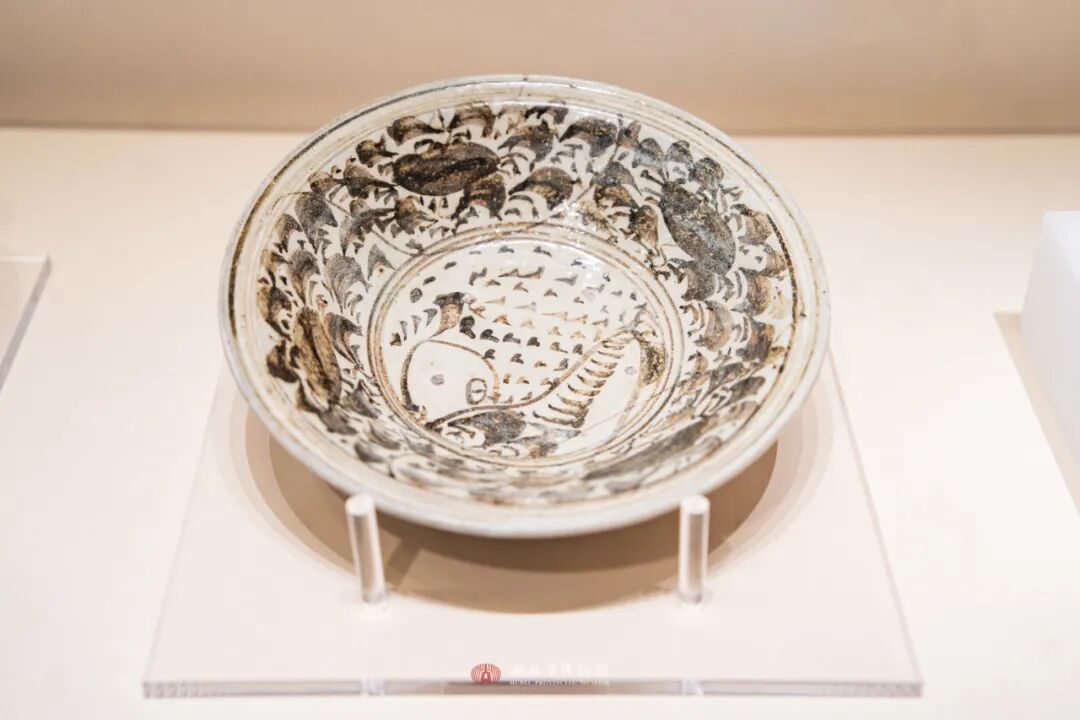
Bowl with Carp Decoration | Sukhothai, Thailand | 15th century
While Sukhothai is far away from the sea, local rivers and lakes have plenty of fish that make a popular food.
Freshwater fish is also a star of the dining table, whether cooked, fried, dried, grilled, or made into a savory fish sauce used in soups, salads, and many other dishes.
As fish became an everyday food, fish motifs became a common decoration on Sukhothai ceramics. Traditionally, eating with the fingers of the right hand was the most common way to enjoy a meal, but nowadays spoon and fork have come to be preferred—at least in public contexts and in urban families increasingly also at home.
Making the most of local resources, seasoned eaters draw culinary inspiration from native ingredients: Fresh coriander, lime leaves, Thai basil, ginger, galangal, garlic, tamarinds and spicy chilis are among the ingredients that contribute to characteristic flavours.
Whereas Thai cuisine uses a lot of coconut cream, this is less common in Myanmar where oily dishes are preferred. Pickled tea leaves are a unique, popular snack in Myanmar that together with roasted sesamum, peanuts, dried prawn and deep fried garlic is turned in to a delicious salad often served with green tea to entertain dear guests.
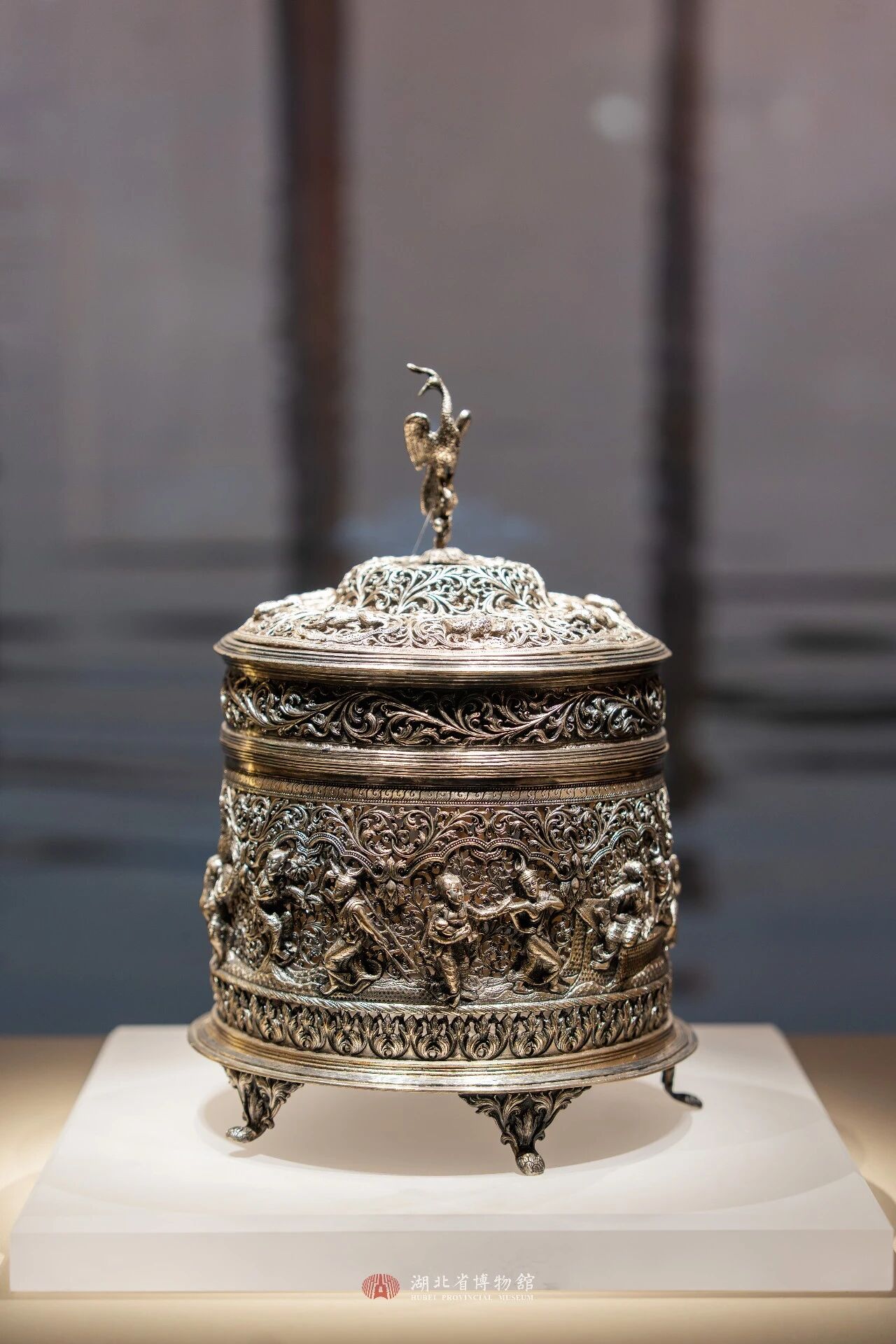
Silver Betel Box | Myanmar | Late 19th century
The décor of this container for betel nuts features elements of the Jātaka stories as well as floral patterns on the sides. On the lid sits a peacock. An inscription at the bottom of this vessel says that it was created by someone named “Master Maung Po Myint.”
Beyond main meals, there is an unique betel culture.
Betel thrives in hot and humid climates and has long been a traditional stimulant in Southeast Asia, South Asia, and southern China. Myanmar and Thailand abound in betel, and they have created a variety of exquisitely crafted betel utensils.
Betel is not just a daily snack, but a grand gesture of hospitality, served with various ingredients in beautiful vessels for guests. At the same time, because betel helped monks overcome feelings of hunger during fasting, betel utensils were also often donated as offerings to temples.
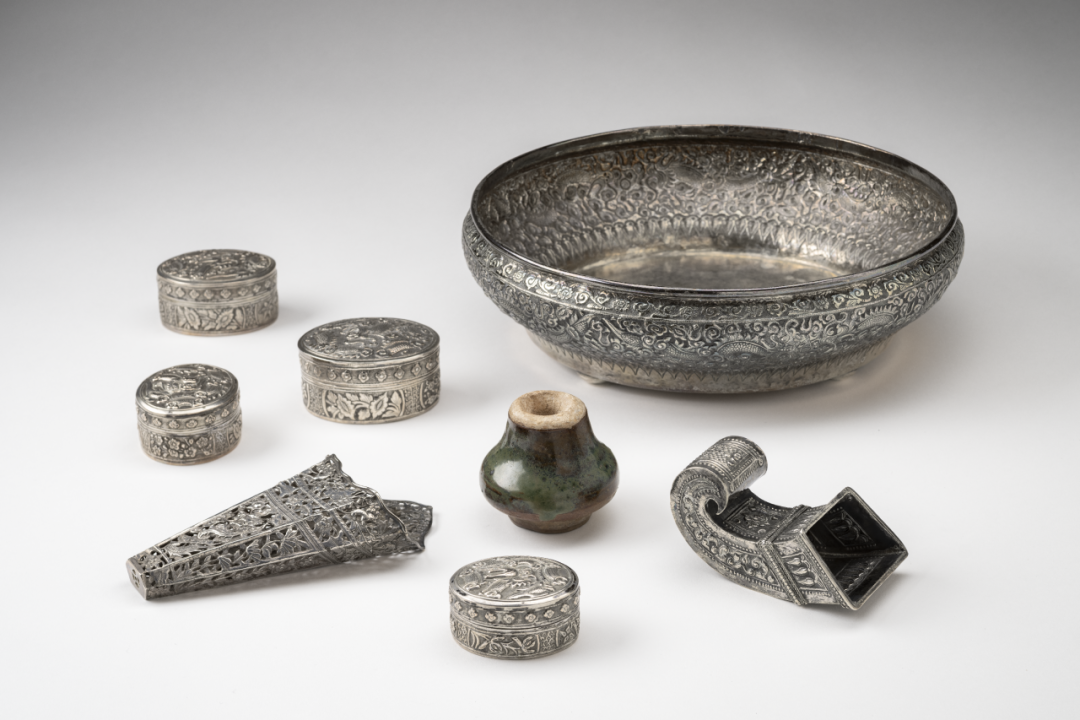
Set for Serving Betel.
©Linden-Museum Stuttgart, Photographer: Dominik Drasdow
This exquisitely crafted set is typical of northern Thailand for entertaining honoredguests, including spice boxes, trays for betel leaves, and a lime paste container.
Nowadays, with increased health awareness, people have come to recognize the negative effects of betel chewing on their health, and betel culture is slowly declining.
03
The Aesthetics of
Thai and Myanmar Artifacts
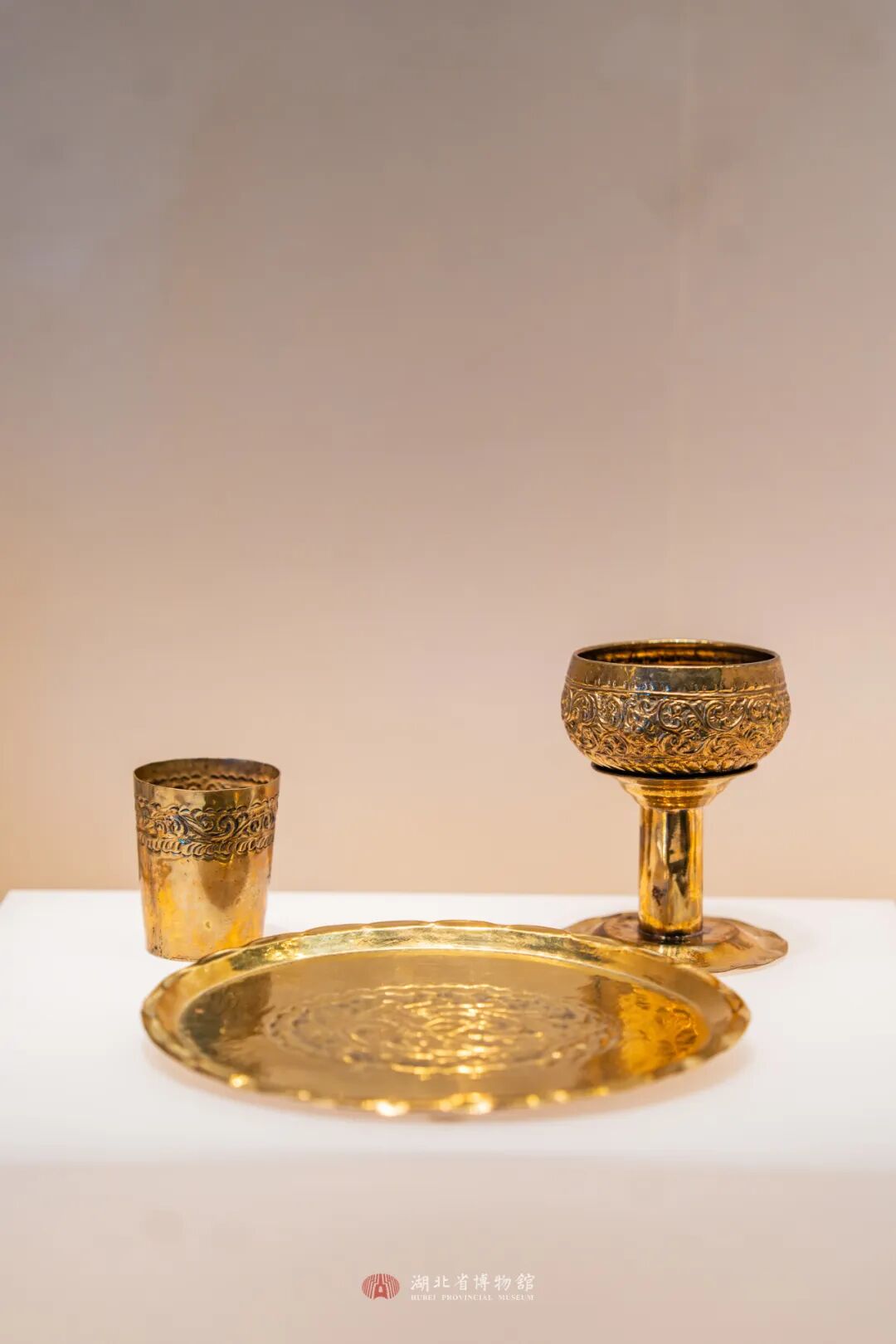
Sukhothai, located in lower northern Thailand along the route between Bangkok and Chiang Mai, was the capital of the Sukhothai Kingdom from the 13th to the 15th century. It is famous for producing exquisite ceramics, most notably celadon wares and underglaze painted black-and-white wares.
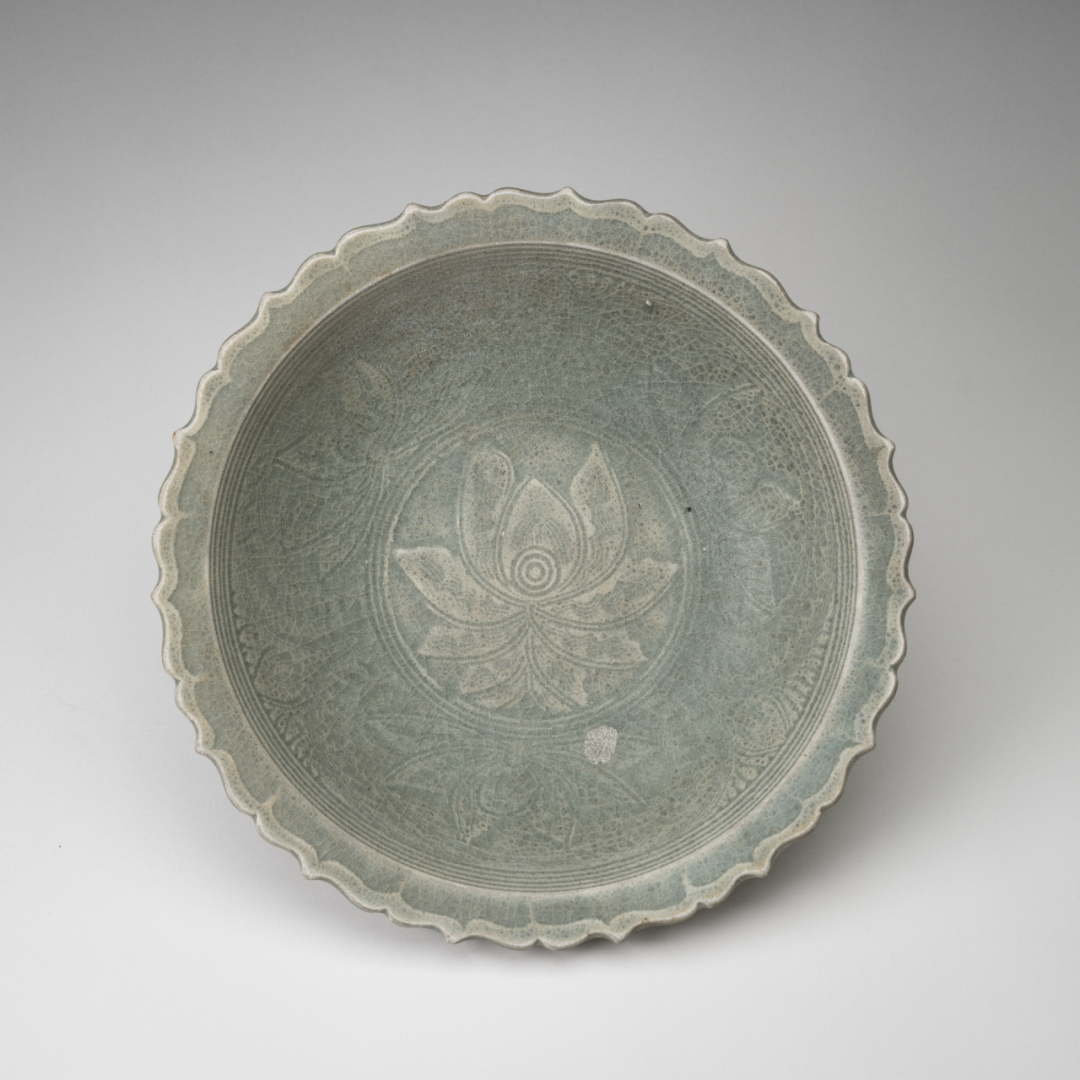
Bowl with Lotus Decoration | Si Satchanalai, Ko Noi | 15th century
©Linden-Museum Stuttgart, Photographer: Dominik Drasdow
While it has suffered over the centuries, this celadon bowl created in the kilns at Ko Noi during the height of ceramic art there features a rich underglaze decoration and can be counted among the masterpieces of Thai ceramic art. Such works were not only used locally but also coveted export goods.
The celadon technique may have initially been inspired by Chinese celadon. Traditional Chinese motifs such as peonies, carps, and lotus flowers found on these ceramics attest to the cultural exchange of the past.
From the 18th century onwards Thai nobility treasured Benjarong (“five coloured”) ware that was usually made by decorating imported Chinese ceramics ware with Thai ornaments in vibrant colors.“Benjarong” means “five colors”, and these splendid ceramics combine Chinese, Indian, and Siamese cultural traditions.
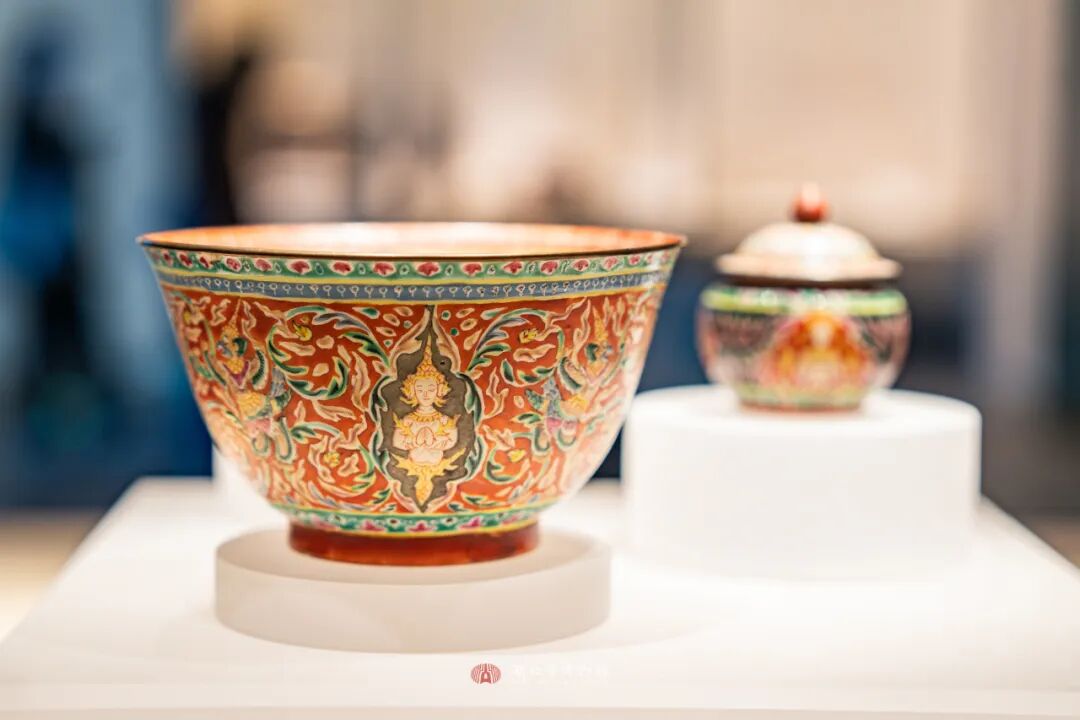
Benjarong Ware Bowl| China/Thailand |18th–19th century
Most vessels are said to have been produced in Jingdezhen and Guangzhou, but they were decorated with colorful enamels in a typical Thai style. Chinese merchants residing in Southeast Asia organized the import, but it is not exactly known whether the painting work was completed in China or Siam.
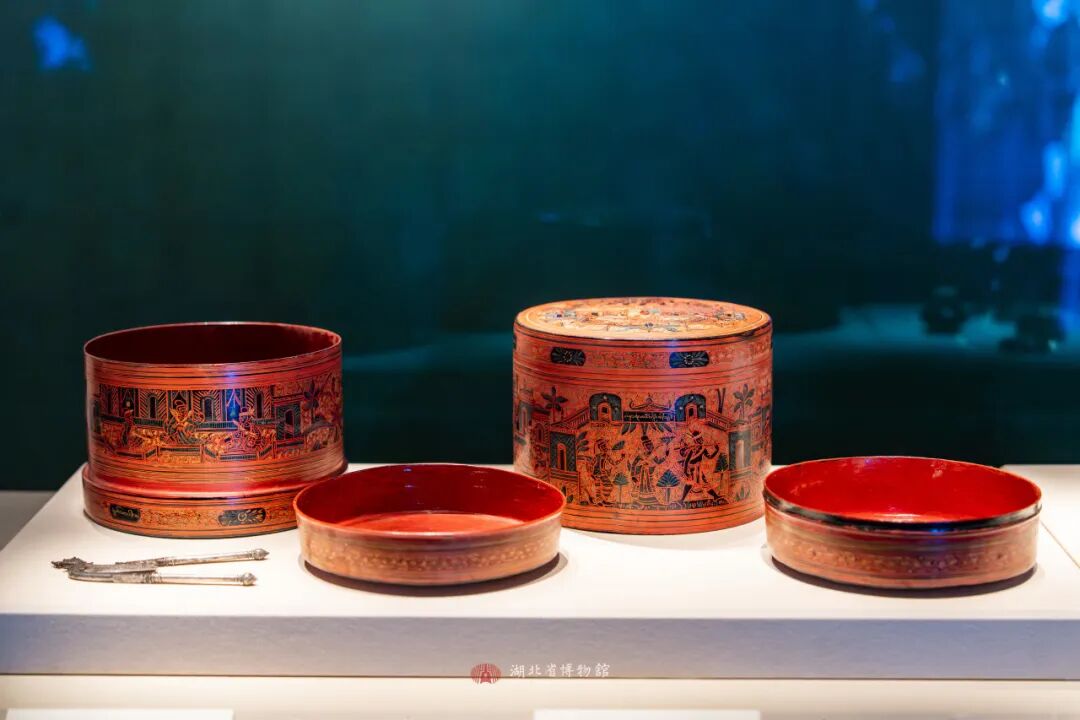
Lacquerware from the ancient city of Bagan by the Ayeyarwaddy River represents the pinnacle of Myanmar lacquer art. As the old capital of the Bagan Kingdom, Bagan's lacquerware skills are world-renowned.
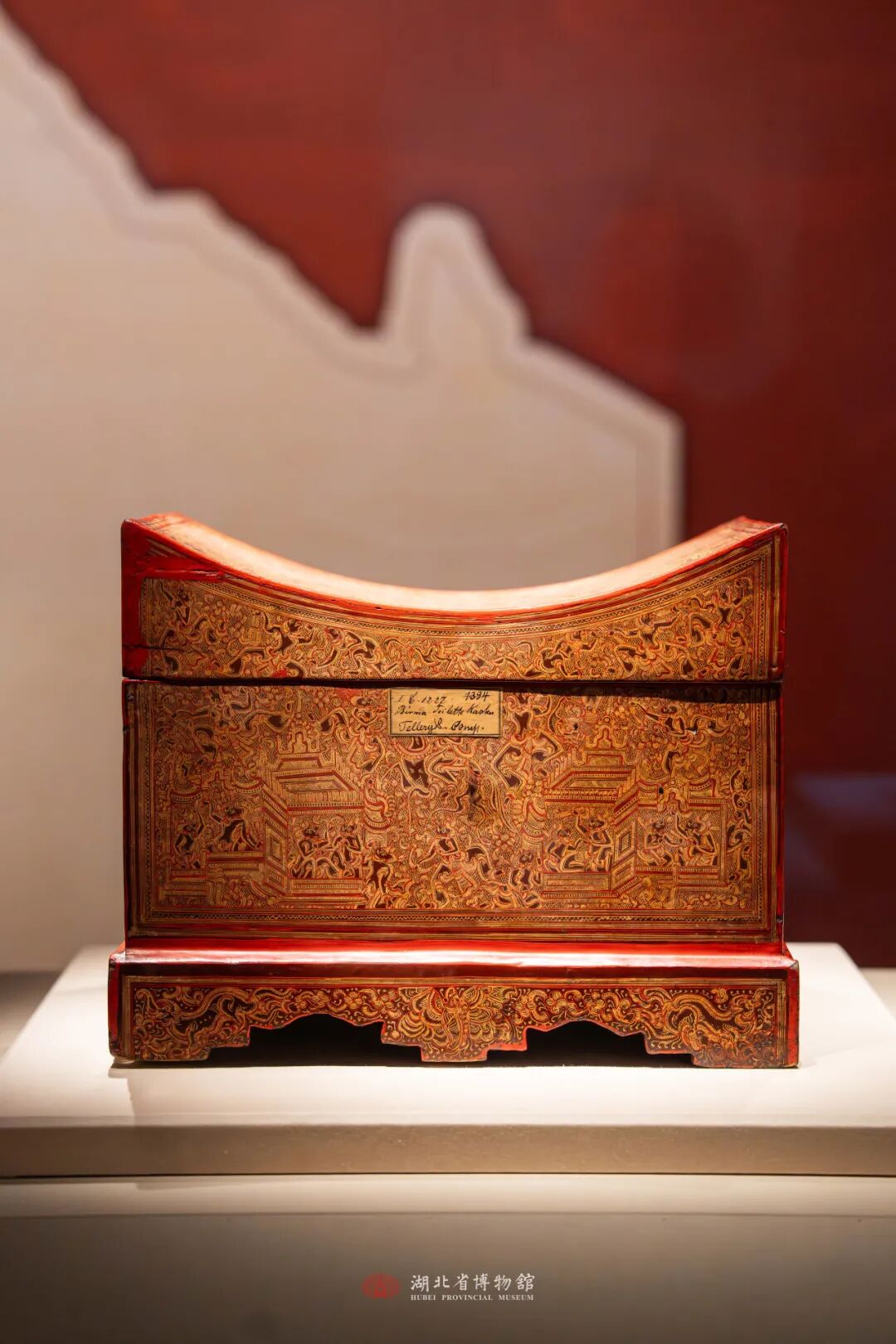
Lacquer Chest| Bagan, Myanmar |1880s
The chest is decorated with festive scenes, dancers, and pavilions. The label on the box itself suggests it might have been meant for toiletries and cosmetics. With the curved lid, on the other hand, it might also have doubled as a headrest.
The process of creating lacquerware objects always requires a basic structure to which many layers of lacquer will then be applied. The specialty of Bagan lacquerware artisans is that they create thin walled, flexible lacquerware cups and bowls using a basic structure woven from thin bamboo fibers combined with horsetail hair.
Myanmar silverware craftsmanship is counted as one the country’s “ten decorative arts”, and has played a significant role in the creation of religious ritual objects and items for royal use.
04
Festive Celebrations
and Entertaining Lives
The year in Myanmar and Thailand is structured by festivals that are preferably held on full moon days. People customarily combine pilgrimage and merrymaking, visiting sacred sites or monuments that house relics of the Buddha, the Dhamma, or famous monks.
During festivals, markets spring up around the monuments, offering food and souvenirs, while music, theatre, marionette shows, and shadow plays take turns to entertain.
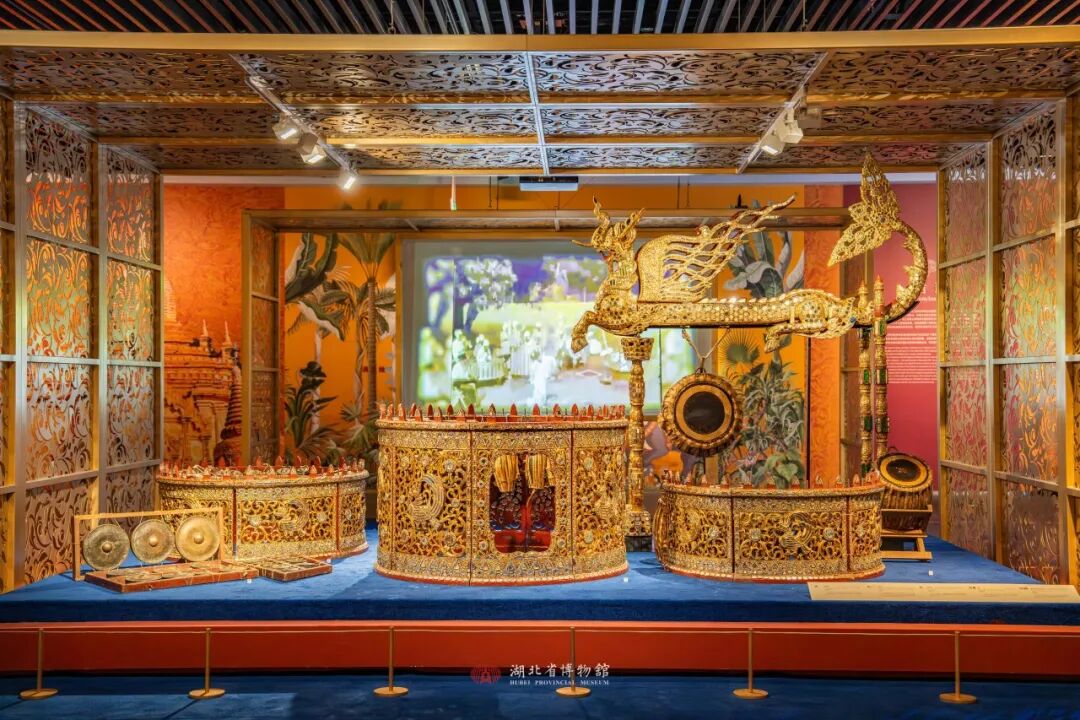
Hsaing Ensemble.
The hsaing ensemble of Myanmar consists mainly of percussion instruments that do not only play rhythms, but also melodies.
The traditional hsaing ensemble is the main part of celebrations, with gongs, drums, and shawms creating melodies that are both fervent and solemn. The ensemble’s music accompanies festive occasions such as weddings, temple festivals and transition rites, but also funerals and mourning ceremonies.
In Myanmar tradition, boys were expected to join a monastery as novice monks for a short period. Even today, many families still hold a grand noviciation ceremony for their sons to mark their coming of age.
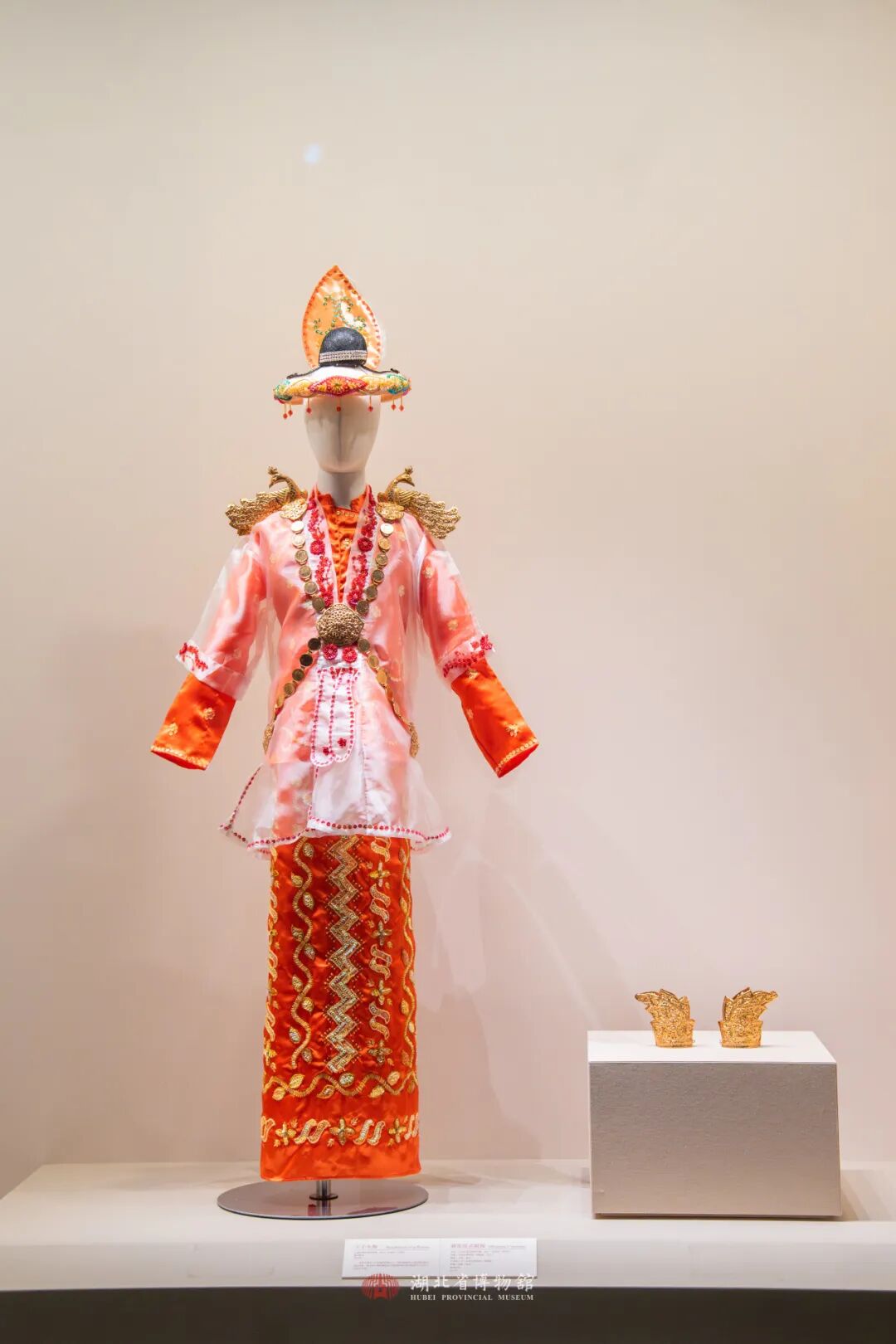
Shinpyu Costume | Yangon, Myanmar | 2013
The ceremony reenacts the life of Prince Siddhartha, who became the Buddha. The boy is dressed as a prince with a costume that resembles the ceremonial dress of 19th century Myanmar royalty. The boy is placed on an ornately decorated elephant, horse or vehicle and lead in a procession through the village or town to the monastery where they get their heads shaved and exchange the princely dress for the robes of a monk. The event is accompanied by a festive feast and entertainment for the entire community.
In Myanmar, one of the most unmissable performances is marionette theatre. Painted wooden marionettes, dressed in elaborate costumes in the style of the Konbaung Dynasty(1752–1885CE), are operated by a puppeteer who manipulates up to 18 strings for each marionette.
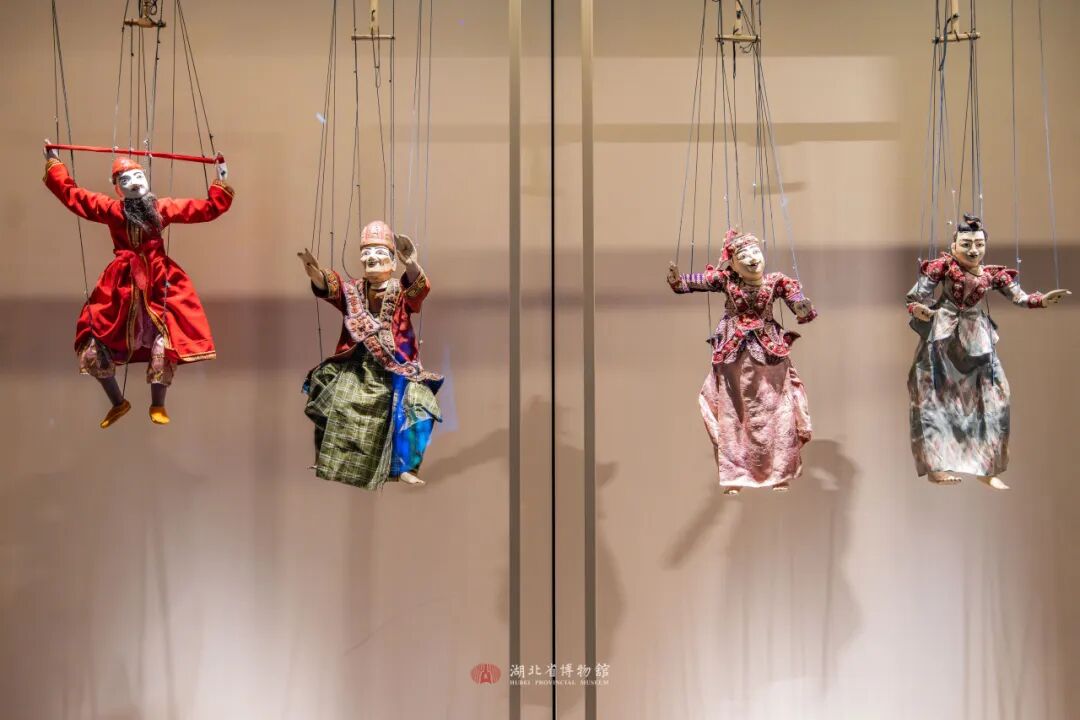
Marionettes | Myanmar | 20th century
Myanmar marionette plays usually perform stories from the Jātakas, tales about the earlier existences of the Buddha and how he gradually perfected his virtues until he was finally fit to be reborn as a Buddha. The plays were thus meant to both entertain and provide moral education by teaching people which values to embrace and how to work on their own personalities.
The art has been documented since the 15th century and reached its peak during the 18th and 19th centuries. A set of marionettes traditionally consisted of 28 figures including humans, mythological characters and animals.
Thailand has several different traditions of shadow theatre, including the popular Nang Talung from southern Thailand and the royal Nang Yai.
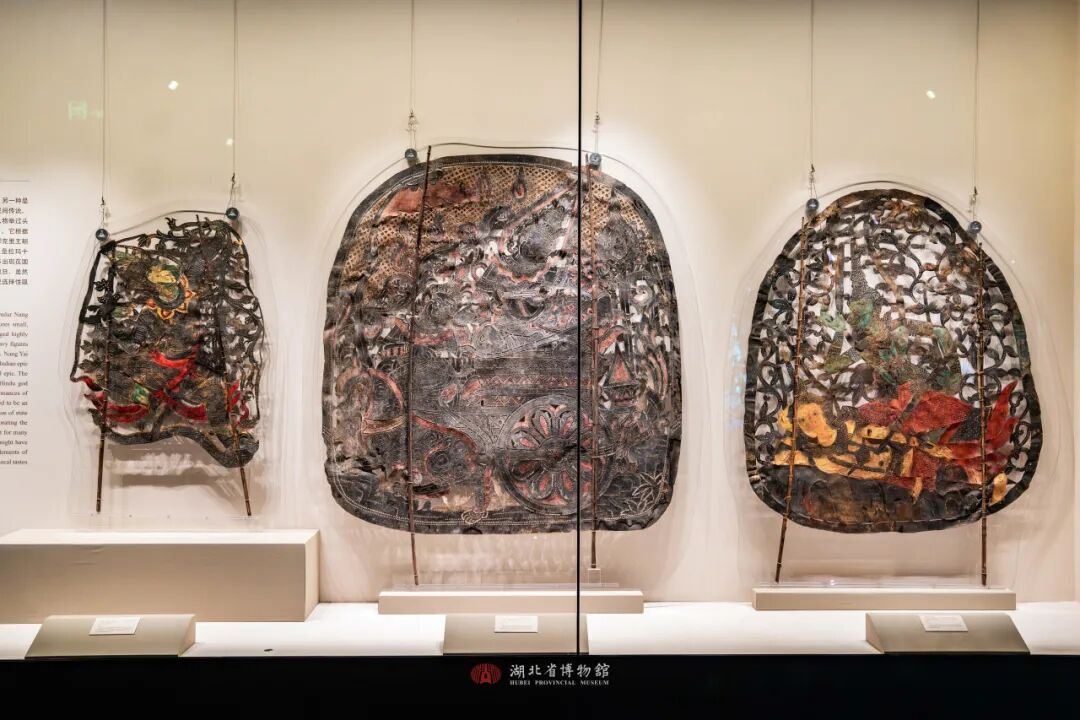
Thai Shadow Puppet | Thailand | Early 20th century
Puppets used in Nang Yai performances often do not only display individual characters, but entire scenes.
Nang Talung popular in southern Thailand, features small, colorful puppets that perform popular folk stories.
The royal Nang Yai staged highly sophisticated performances of professional dancers who held the large and heavy figures above their heads, dancing with them both behind and in front of a huge screen,which held the occasion of state ceremonies, temple festivals, public holidays and also ceremonies commemorating the death of a member of the royal family.
The objects exhibited in this exhibition are all loans from the Linden-Museum Stuttgart in Germany.
From April 29 to September 6, we welcome you to the Special Exhibition Hall on the third floor of the South Building of the Hubei Provincial Museum to visit “Peacock and White Elephant: People and Their Lives between the Ayeyarwaddy and the Mekong” and experience the customs and life in Mainland Southeast Asia.
Peacock and White Elephant:
People and Their Lives between the Ayeyarwaddy and the Mekong
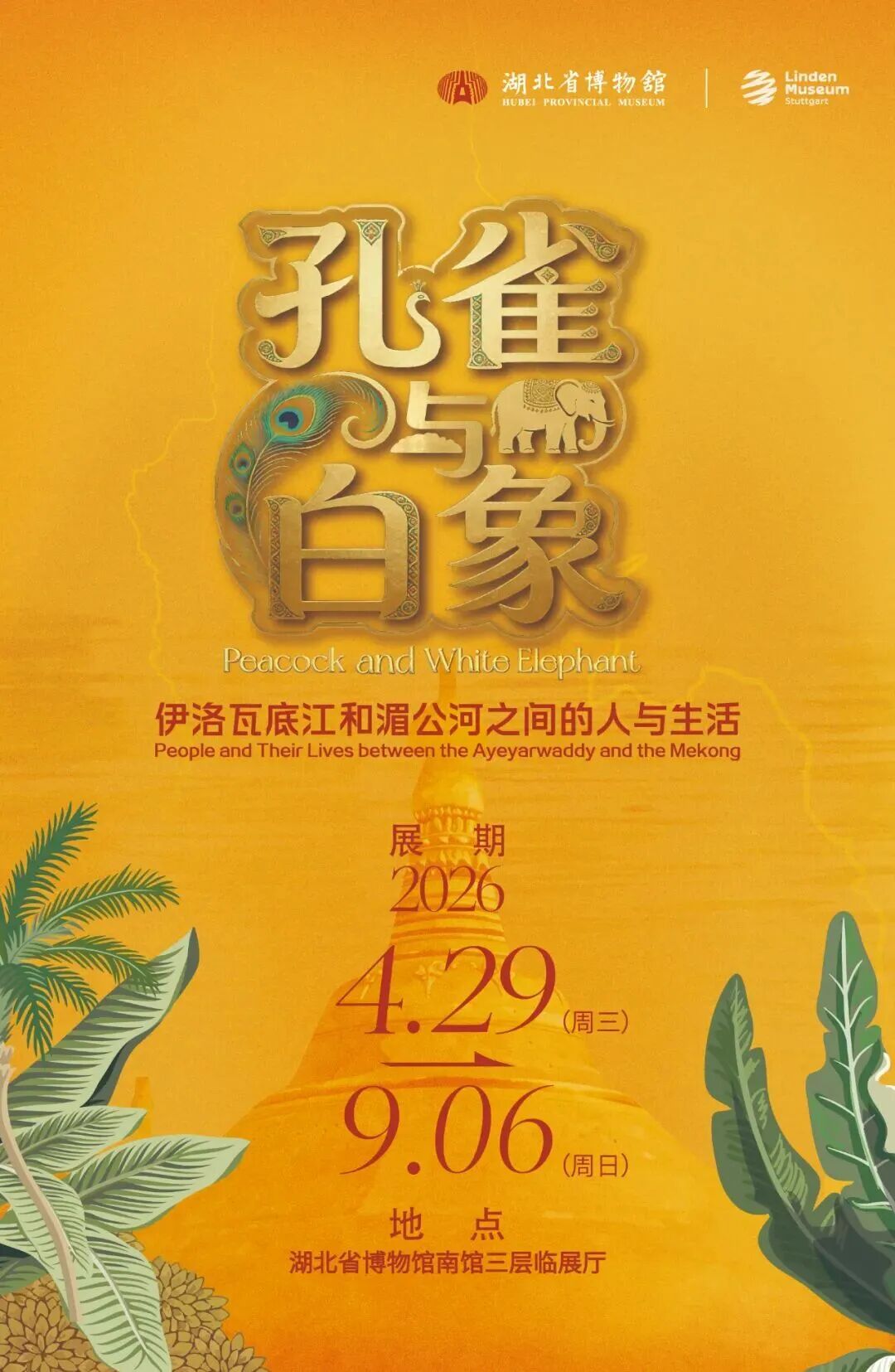
|Exhibition Dates|
April 29–September 6, 2026
|Venue|
Special Exhibition Hall, 3rd Floor,
South Building, Hubei Provincial Museum
Free admission